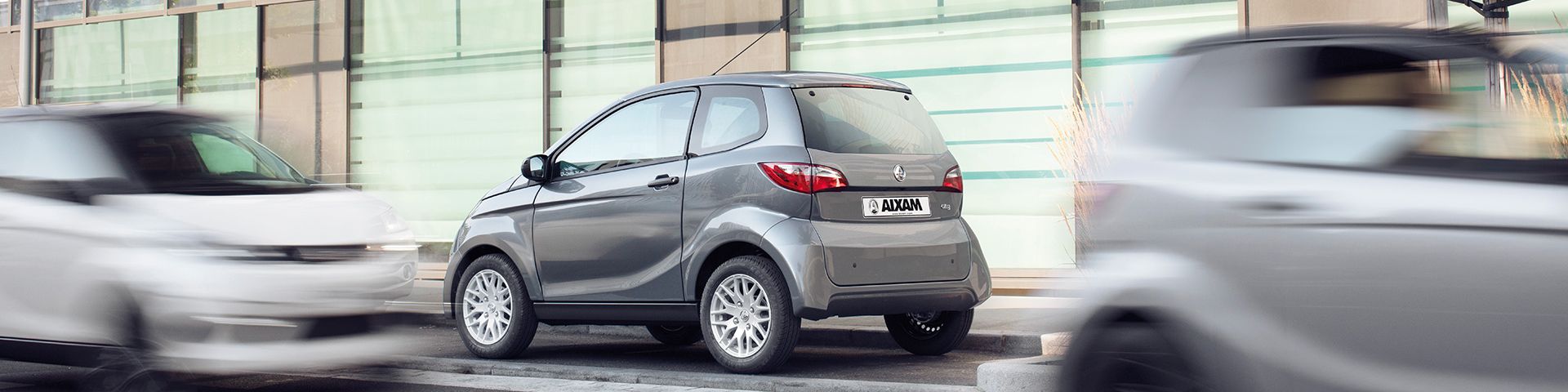
The profiles of clients needing to get around are:
Rural depopulation, the disappearance of local shops, the increase in peri-urban residential areas, the lack of public transport due to non-profitability... These social issues increase problems linked to mobility.
The licence-free car represents independence, a way of travelling with complete freedom whatever the weather!
The design of a licence-free vehicle guarantees far greater safety than that of a two-wheeler. The handling, compactness and equipments are additional assets.
The Road Safely figures are clear: quadricycles are in the least “accident-contributing” vehicle category (ratio fleet in circulation/number of people injured or killed).


